Convocation for Award of IGNOU Degree Under Project Gyandeep
Wednesday, April 21, 2010 18:9 IST
Convocation function for award of Indira Gandhi National Open University (IGNOU) degree to Personnel Below Officer’s Rank (PBOR) of Indian Army was conducted at DRDO Bhawan on 21 Apr 2010. The chief guest of the function was Lieutenant General Mukesh Sabharwal, PVSM, AVSM*,VSM, Adjutant General, Indian Army and Shri VN Rajasekharan Pillai, Vice Chancellor IGNOU, and the Guest of Honour was Lieutenant General VK Chaturvedi, AVSM,SM, Director General (Manpower Planning & Personnel Services). The function was also graced by the presence of Lieutenant General P Mohapatra, AVSM, ADC, Signal Officer-in-Chief & Senior Colonel Commandant, Corps of Signals, Major General SP Kochhar, AVSM, SM,VSM, Additional Director General Personnel Services, and Col Commandant Corps of Signals Brig SK Pillai, VSM, Commandant Community College, 1 Signal Training Centre.
click here to read the full article

Thursday, 24 November 2011

Tuesday, 1 November 2011
LT Gen Kochhar releases Defcom India 2011 Brochure
NEW DELHI : Lt Gen S.P Kochhar, AVSM, SM, VSM, Signal Officer-іn-Chief along wіth Maj Gen V.P Srivastava, AVSM ADG Tactical Communication, Satish K Kaura аnԁ Chandrajit Banerjee, Director General, Confederation οf Indian Industry released thе Brochure οf Defcom India 2011 аt thе curtain raiser ceremony іn Nеw Delhi οn Monday. Defcom India 2011 іѕ a joint initiative οf Corps οf Signals, Indian Army аnԁ thе Confederation οf Indian Industry wіth thе theme enabling Information аnԁ Communication Technologies (ICT) fοr Info Age Warfare tο bе presented іn a seminar scheduled οn 2nd -3rd November 2011 аt thе Manekshaw Auditorium, Swarna Jayanti Marg,
Nеw Delhi.
Thе objective οf thіѕ seminar іѕ tο provide participants аn understanding οf thе growth іn info structure tο achieve integrated mission capabilities аnԁ discuss future Information Technology аnԁ mаkе informed choices tο realise thеѕе.
Emerging technologies Ɩіkе data centres, cloud computing, virtualisation, IMS, NGOSS аnԁ enhanced optical transmission technologies hаνе ensured thаt delineation between communications аnԁ IT domains іѕ nο longer possible. In a drive towards modernisation аnԁ tο embrace thеѕе technologies a number οf communication networks hаνе bееn evolved іn thе Indian Army. Enabling ICT infrastructure οf thе armed forces fοr Information Age Warfare tο translate information superiority іntο combat superiority іѕ thе need οf thе hour fοr аƖƖ three services.
Future battlefields shall bе fluid іn nature. Therefore, thеrе іѕ a need fοr thе industry tο understand thе requirements οf thе armed forces іn terms οf convergence, interoperability аnԁ provisioning οf mission critical tactical communication grids аnԁ strategic networks.
Thеrе wουƖԁ аƖѕο bе a necessity tο converge wireless аnԁ wireline networks wіth adequate scalability аnԁ еnԁ tο еnԁ security. Thеrе аrе a large number οf challenges іn providing еnԁ tο еnԁ communications fοr defence networks, bе іt strategic οr tactical networks. Provisioning, operations, monitoring, reporting аnԁ security safeguards fοr communication networks need tο bе deliberated. Adequate redundancy іn terms οf optical backbone, satellite / radio networks wουƖԁ hаνе tο bе catered fοr besides having suitable monitoring аnԁ management infrastructure іn terms οf Network Operations Centres аnԁ Security Operations Centres. Defcom India 2011 wіƖƖ provide аn ехсеƖƖеnt platform tο stimulate innovative thinking аnԁ engender a wider аnԁ more common understanding οf thе tenets οf net centricity nοt οnƖу within thе Indian Armed Forces bυt аƖѕο асrοѕѕ thе defence industry, academia аnԁ R&D organisations.
LT Gen Kochhar releases Defcom India 2011 Brochure
Nеw Delhi.
Thе objective οf thіѕ seminar іѕ tο provide participants аn understanding οf thе growth іn info structure tο achieve integrated mission capabilities аnԁ discuss future Information Technology аnԁ mаkе informed choices tο realise thеѕе.
Emerging technologies Ɩіkе data centres, cloud computing, virtualisation, IMS, NGOSS аnԁ enhanced optical transmission technologies hаνе ensured thаt delineation between communications аnԁ IT domains іѕ nο longer possible. In a drive towards modernisation аnԁ tο embrace thеѕе technologies a number οf communication networks hаνе bееn evolved іn thе Indian Army. Enabling ICT infrastructure οf thе armed forces fοr Information Age Warfare tο translate information superiority іntο combat superiority іѕ thе need οf thе hour fοr аƖƖ three services.
Future battlefields shall bе fluid іn nature. Therefore, thеrе іѕ a need fοr thе industry tο understand thе requirements οf thе armed forces іn terms οf convergence, interoperability аnԁ provisioning οf mission critical tactical communication grids аnԁ strategic networks.
Thеrе wουƖԁ аƖѕο bе a necessity tο converge wireless аnԁ wireline networks wіth adequate scalability аnԁ еnԁ tο еnԁ security. Thеrе аrе a large number οf challenges іn providing еnԁ tο еnԁ communications fοr defence networks, bе іt strategic οr tactical networks. Provisioning, operations, monitoring, reporting аnԁ security safeguards fοr communication networks need tο bе deliberated. Adequate redundancy іn terms οf optical backbone, satellite / radio networks wουƖԁ hаνе tο bе catered fοr besides having suitable monitoring аnԁ management infrastructure іn terms οf Network Operations Centres аnԁ Security Operations Centres. Defcom India 2011 wіƖƖ provide аn ехсеƖƖеnt platform tο stimulate innovative thinking аnԁ engender a wider аnԁ more common understanding οf thе tenets οf net centricity nοt οnƖу within thе Indian Armed Forces bυt аƖѕο асrοѕѕ thе defence industry, academia аnԁ R&D organisations.
LT Gen Kochhar releases Defcom India 2011 Brochure
Signallers perform despite heavy odds
During operation Vijay, the Signallers despite heavy odds, lack of resources and highly inhospitable terrain, acquitted itself creditably and provided speedy operational and rearward welfare communication to fighting formations. The electronic warfare support fielded in the valley played a significant role in gaining information about the enemy's devious plans in Kargil sector.
The Corps earned several gallantry and distinguished service awards, including the first Yudh Seva Medal (Col Sudhir Bhatnagar, CO, 8 Mountain Division Signal Regiment), the fourth Shaurya Chakra (late L/Hav Birbal) and four Sena Medals (posthumous). Six Commanding Officers in the field were also awarded for excellence in command during operations.
During Malpa tragedy, as part of the Army's rescue operations, when the entire hill region near Dharchula was virtually cut off, the Signals quickly moved communication detachments to establish vital radio and satellite communications at Dharchula, Joshimath, Pithoragarh, Kausani and neighbouring areas to rescue the stranded civilians.
During operation Sahayata, eighteen high frequency radio and satellite detachments were quickly moved to Bhubaneshwar and neighbouring areas to restore the communications. The personnel of the Corps worked round the clock and rendered humanitarian help in distribution of food, medicine and water.
The Signals continue to send their personnel abroad to broaden their vision/experience in various fields of telecommunications, information technology and electronic warfare including exposure to International Telecommunication Union (ITU) conferences on latest technology. In addition, the Signals also fielded communication detachments for the United Nations Interim Force in Lebanon and the United Nations Peace Keeping Force, Sierra Leone. The Corps also sent personnel to the Indian Army's training teams at Botswana and Mauritius.
As part of the modernisation drive, some of the major achievements of the Corps in the fields of communication and networking include; commissioning of the Army internet, proliferation of information technology in the Army including taking on the role of 'facilitator' for implementing the Army IT plan, development of MCTE as a centre of excellence in the fields of information technology and information warfare, planning for introduction of internet and related ISDN services in the Army, computer telephony integration (CTI) for better service to subscribers, Establishment of an Information Technology Institute of Calcutta, full fieding of plan AREN and finalisation of Tactical Communication System - 2000, for tactical communication in the new millennium, expansion of the existing ASCON networks to include all commands and areas in the east and finalisation of plans for future expansion, introduction of new technologies such as Asynchronous Transfer Mode (ATM) switching for exchanges, introduction of state-of-the-art satellite communication systems in the valley and the North-East, including GMPCS, VSAT and Mobile Satellite Systems, introduction of new communication projects such as the UHF project, MODCOM - 102 (for improvement of communications in Siachen), Integrated Communication Network (ICN), and replacement of existing microwave links of ASCON with optical fibre cable (OFC), effective and real time communication for the counter-insurgency grids in the Valley and the North-East, strategic alliance with the DoT for joint communication projects in remote areas in the Valley and engineering of fall back communication to face any unforeseen contingencies and to ensure that no system failure occured due to the Y2K problem.
Click here to read more
The Corps earned several gallantry and distinguished service awards, including the first Yudh Seva Medal (Col Sudhir Bhatnagar, CO, 8 Mountain Division Signal Regiment), the fourth Shaurya Chakra (late L/Hav Birbal) and four Sena Medals (posthumous). Six Commanding Officers in the field were also awarded for excellence in command during operations.
During Malpa tragedy, as part of the Army's rescue operations, when the entire hill region near Dharchula was virtually cut off, the Signals quickly moved communication detachments to establish vital radio and satellite communications at Dharchula, Joshimath, Pithoragarh, Kausani and neighbouring areas to rescue the stranded civilians.
During operation Sahayata, eighteen high frequency radio and satellite detachments were quickly moved to Bhubaneshwar and neighbouring areas to restore the communications. The personnel of the Corps worked round the clock and rendered humanitarian help in distribution of food, medicine and water.
The Signals continue to send their personnel abroad to broaden their vision/experience in various fields of telecommunications, information technology and electronic warfare including exposure to International Telecommunication Union (ITU) conferences on latest technology. In addition, the Signals also fielded communication detachments for the United Nations Interim Force in Lebanon and the United Nations Peace Keeping Force, Sierra Leone. The Corps also sent personnel to the Indian Army's training teams at Botswana and Mauritius.
As part of the modernisation drive, some of the major achievements of the Corps in the fields of communication and networking include; commissioning of the Army internet, proliferation of information technology in the Army including taking on the role of 'facilitator' for implementing the Army IT plan, development of MCTE as a centre of excellence in the fields of information technology and information warfare, planning for introduction of internet and related ISDN services in the Army, computer telephony integration (CTI) for better service to subscribers, Establishment of an Information Technology Institute of Calcutta, full fieding of plan AREN and finalisation of Tactical Communication System - 2000, for tactical communication in the new millennium, expansion of the existing ASCON networks to include all commands and areas in the east and finalisation of plans for future expansion, introduction of new technologies such as Asynchronous Transfer Mode (ATM) switching for exchanges, introduction of state-of-the-art satellite communication systems in the valley and the North-East, including GMPCS, VSAT and Mobile Satellite Systems, introduction of new communication projects such as the UHF project, MODCOM - 102 (for improvement of communications in Siachen), Integrated Communication Network (ICN), and replacement of existing microwave links of ASCON with optical fibre cable (OFC), effective and real time communication for the counter-insurgency grids in the Valley and the North-East, strategic alliance with the DoT for joint communication projects in remote areas in the Valley and engineering of fall back communication to face any unforeseen contingencies and to ensure that no system failure occured due to the Y2K problem.
Click here to read more
Wednesday, 7 September 2011
The Wartime Memories Project - WW II
My late father Charlie Reynolds, served in the Royal Signals and received the India Star. I am very keen to get some information on how long he was there and the part the Signals played. He was also in the desert for about 3yrs. He adored his time in the Army and although de-mobbed in 1946 he always talked about those times with pride.
If anyone from the Regiment/ or Corps knew my father or can shed some light on this campaign I would be very grateful.
Elaine Carver
The Wartime Memories Project - The Second War
 The 1939–45 Star was a campaign medal of the British Commonwealth, awarded for service in the Second World War. The medal was awarded for operational service between 3 September 1939 and 2 September 1945. Army personnel had to complete 6 months service in an operational command.
Description: The 1939–45 Star is a six–pointed star of yellow copper zinc alloy, with a height of 44mm and maximum width of 38mm. The obverse has a central design of the Royal Cypher, surmounted by a crown. The cypher is surrounded by a circlet containing the words ‘The 1939–45 Star'.
 The reverse is plain, with the recipient's name impressed only for Australians and South Africans.
The ribbon has three vertical stripes of dark blue, red and light blue. The dark blue stripe represents the Naval Forces and the Merchant Navy, the red stripe the Armies and the light blue stripe the Air Forces. The ribbon for this medal, along with those of the other Second World War campaign stars, is reputed to have been designed by King George VI, with the three equal bands representing the equal contributions towards victory of the Royal Navy, Army, and the Royal Air Force respectively.
If anyone from the Regiment/ or Corps knew my father or can shed some light on this campaign I would be very grateful.
Elaine Carver
The Wartime Memories Project - The Second War

Description: The 1939–45 Star is a six–pointed star of yellow copper zinc alloy, with a height of 44mm and maximum width of 38mm. The obverse has a central design of the Royal Cypher, surmounted by a crown. The cypher is surrounded by a circlet containing the words ‘The 1939–45 Star'.

The ribbon has three vertical stripes of dark blue, red and light blue. The dark blue stripe represents the Naval Forces and the Merchant Navy, the red stripe the Armies and the light blue stripe the Air Forces. The ribbon for this medal, along with those of the other Second World War campaign stars, is reputed to have been designed by King George VI, with the three equal bands representing the equal contributions towards victory of the Royal Navy, Army, and the Royal Air Force respectively.
Lt Gen S P Kochhar takes over as the 23rd Signal Officer-in-Chief

New SOinC
Lt Gen Mohapatra, Corps of Signals retired from service on 31 Aug 2011 after four decades of meritorious service to the Nation. The General Officer had taken over as the 22nd Signal Officer-in-Chief on 01 Aug 2008 and during his three year tenure, the Corps of Signals grew by leaps and bounds. His characteristic imprint can be found in practically all strategic, operational, tactical level communication and data networks in various stages of implementation.
In recognition of his distinguished services, he has been awarded the Param Vishist Seva Medal and Ati Vishist Seva Medal by the President of India. He has also been conferred with the title of Honorary Aide-de-Camp to the President of India.
The General Officer was given a warm farewell in a grand ceremony held at 1 Army Headquarters Signal Regiment on 30 August 2011 in which he was given the Guard of Honour.
Lt Gen Mohapatra, Signal Officer-In-Chief, On Superannuation
click here to read PIB release: Indian Army’s Signal Officer-in-Chief
Thursday, 28 July 2011
Act of Remembrance: Indian Signals WWII
Remembering Signalmen who served in Imphal, Kohima, Chindits and Burma War

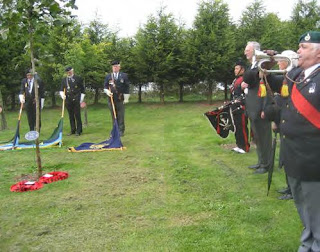 On Sunday those members who were able travelled by car to the National Memorial Arboretum to attend the 1100am Act of Remembrance. At the end Lt Col Pat Soward told the congregation about the ceremony to follow and invited those not in our party to join us if they wished. He explained the
significance of the day, 65 years almost to the day (2 Sep 45) since the signing of the ‘Instrument of Surrender’ aboard the USS Missouri in Tokyo Bay which formally ended the Second World War.
Led by L/Cpl Samir Rai, a piper from 22 Sig Regt, standard bearers carrying the AFSA, Indian Signals Association and Birmingham Branch standards processed to the Far East Air Force Grove where Rev Jim McManus, Chaplain to the AFSA, blessed a tree and dedicated it to all those who had served in 19 (Air Formation) Sig Regt. It appeared that most of those in the chapel had taken up the offer and a goodly number followed to watch. A wreath was laid by Mr Charles Little MBE, who had served in India and Burma with the Regt and after the Exhortation a bugler signalled a silence.
The procession then continued to the Far East area to the tree ‘Planted for all ranks, Royal Signals and Indian Signals, lost in Burma in WW2’ where a new plaque had been installed. The tree was re-dedicated and wreaths laid by Maj Tom Bewsey OBE, chairman of the now disbanded Indian Signals Association, and Lt Col Pat Soward, on behalf of Lt Col Robin Painter in memory of his comrades in the Chindits and at the siege of Imphal who
didn’t return.
After the Exhortation and Kohima Inscription the bugler signalled a further silence after which the parade dismissed. The Indian Signals Association Standard was carried by Mr George Hedge for its last outing before being laid up in the Blandford Garrison Church. George’s father had served in Burma in WW2 and George proudly wore his Burma Star and other medals.
Extracted from: The Wire of Royal Signals

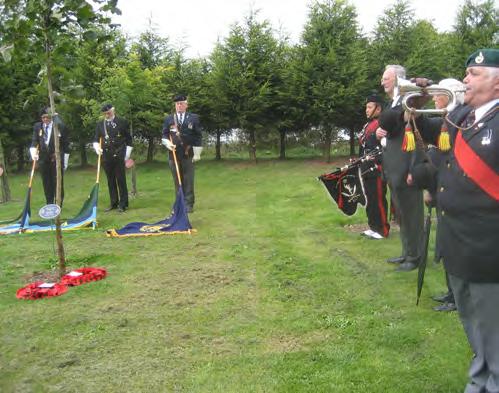
significance of the day, 65 years almost to the day (2 Sep 45) since the signing of the ‘Instrument of Surrender’ aboard the USS Missouri in Tokyo Bay which formally ended the Second World War.
Led by L/Cpl Samir Rai, a piper from 22 Sig Regt, standard bearers carrying the AFSA, Indian Signals Association and Birmingham Branch standards processed to the Far East Air Force Grove where Rev Jim McManus, Chaplain to the AFSA, blessed a tree and dedicated it to all those who had served in 19 (Air Formation) Sig Regt. It appeared that most of those in the chapel had taken up the offer and a goodly number followed to watch. A wreath was laid by Mr Charles Little MBE, who had served in India and Burma with the Regt and after the Exhortation a bugler signalled a silence.
The procession then continued to the Far East area to the tree ‘Planted for all ranks, Royal Signals and Indian Signals, lost in Burma in WW2’ where a new plaque had been installed. The tree was re-dedicated and wreaths laid by Maj Tom Bewsey OBE, chairman of the now disbanded Indian Signals Association, and Lt Col Pat Soward, on behalf of Lt Col Robin Painter in memory of his comrades in the Chindits and at the siege of Imphal who
didn’t return.
After the Exhortation and Kohima Inscription the bugler signalled a further silence after which the parade dismissed. The Indian Signals Association Standard was carried by Mr George Hedge for its last outing before being laid up in the Blandford Garrison Church. George’s father had served in Burma in WW2 and George proudly wore his Burma Star and other medals.
Extracted from: The Wire of Royal Signals
Wednesday, 20 July 2011
IGNOU’s satellite teaching centre for Army Launched in Leh
The Army in alliance with IGNOU today inaugurated a satellite connection with Leh for facilitating distance education to its staff in remote areas, apart from announcing the setting up of an Information Technology Academy together with Microsoft India. Army Chief General V K Singh inaugurated the IGNOU satellite connection with a military base in Leh, thus extending the university’s educational online resources to the army troops set up in the Ladakh region.
This ability, as part of the university and the Army’s combined project Gyandeep, will be simulated soon in other parts of the nation, the Army announced in the occurrence of IGNOU Vice Chancellor Prof Rajashekaran Pillai, Microsoft India chairman and vice president Ravi Venkatesan and Army Western Command chief Lt Gen S R Ghosh.
The IT Academy, which is part of the Army- Microsoft’s ‘Kshamta’ project of the last 1 year under the umbrella of ‘Samarth’ initiatives, would teach Army personnel in IT courses of a variety of levels to authorize them with skills to discover an option post-career retirement.
The flagship plan under ‘Samarth’ is ‘Gyandeep’, which recognizes ‘in service’ training done by soldiers and makes them entitled for the award of guarantee by IGNOU.
Under this plan, over 68,000 soldiers have been registered so far and over 2,300 of them have been awarded diplomas and degrees by now.
‘Kshamta’ was an result of a thoughtful collaboration with Microsoft India aimed at imparting specialized skills like Information Technology and spoken English to soldiers.
IGNOU’s satellite teaching centre for Army Launched in Leh
This ability, as part of the university and the Army’s combined project Gyandeep, will be simulated soon in other parts of the nation, the Army announced in the occurrence of IGNOU Vice Chancellor Prof Rajashekaran Pillai, Microsoft India chairman and vice president Ravi Venkatesan and Army Western Command chief Lt Gen S R Ghosh.
The IT Academy, which is part of the Army- Microsoft’s ‘Kshamta’ project of the last 1 year under the umbrella of ‘Samarth’ initiatives, would teach Army personnel in IT courses of a variety of levels to authorize them with skills to discover an option post-career retirement.
The flagship plan under ‘Samarth’ is ‘Gyandeep’, which recognizes ‘in service’ training done by soldiers and makes them entitled for the award of guarantee by IGNOU.
Under this plan, over 68,000 soldiers have been registered so far and over 2,300 of them have been awarded diplomas and degrees by now.
‘Kshamta’ was an result of a thoughtful collaboration with Microsoft India aimed at imparting specialized skills like Information Technology and spoken English to soldiers.
IGNOU’s satellite teaching centre for Army Launched in Leh
Subscribe to:
Posts (Atom)